

What does year two look like for your home coffee setup? The initial thrill of a new machine often overshadows the daily grind of maintenance, the hunt for replacement parts, or the frustration of a workflow that just doesn't fit. Building a truly perfect home coffee station isn't about chasing the latest features; it's about understanding how each piece of equipment integrates into your routine and holds up over time.
This guide cuts through the marketing noise to focus on the ownership realities of popular coffee gear in 2026. We'll explore options for every budget, highlighting not just what they do well, but also the inevitable friction points and long-term considerations. Our goal is to help you invest in a setup that continues to deliver satisfying coffee, without unexpected headaches, for years to come.
Quick picks: jump to what you need
- a href="#best-overall">Best Overall: Gaggia Classic Pro & Baratza Encore/a>
- a href="#best-value">Best Value: De'Longhi Magnifica Evo/a>
- a href="#best-premium">Best Premium: ECM Synchronika/a>
- a href="#best-for-beginners">Best for Beginners: Breville Bambino Plus/a>
- a href="#best-compact">Best Compact / Small Space: Fellow Stagg EKG & Baratza Encore/a>
How we narrowed the field
Choosing the right components for a home coffee station in 2026 requires looking beyond initial price tags and glossy marketing. Our selection process prioritizes equipment that consistently performs, offers reasonable maintenance, and integrates smoothly into a daily routine, based extensively on verified buyer reports and long-term ownership discussions across enthusiast forums.
We focused on machines and grinders where customer feedback frequently mentions consistent temperature stability, reliable pressure delivery, and readily available spare parts. Deal-breakers included models with proprietary components that limit repair options, or those requiring excessive cleaning cycles that disrupt morning workflow. The true cost of ownership, encompassing descaling solutions, filter replacements, and potential repair expenses, heavily influenced our recommendations.
Furthermore, we considered the learning curve associated with each piece of gear. A perfect espresso machine means little if the grinder makes dialing in shots an exercise in frustration. We looked for pairings that offer a balanced approach to quality and usability, ensuring that your investment translates into enjoyable coffee, not just a countertop ornament.
Best Overall: Gaggia Classic Pro & Baratza Encore
Owner reports consistently highlight the Gaggia Classic Pro's robust build and its ability to produce café-quality espresso, especially when paired with a capable grinder. This machine, a staple for home baristas, features a commercial-style 58mm portafilter and a powerful three-way solenoid valve, which helps dry out the coffee puck for easier cleanup after extraction.
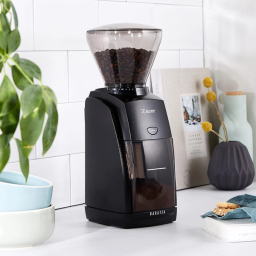
However, achieving consistent results demands a quality grinder. The Baratza Encore, a conical burr grinder, is frequently recommended alongside the Gaggia Classic Pro for its reliable grind consistency, particularly for espresso and drip coffee. While it lacks the micro-adjustments of more expensive espresso-specific grinders, many users find it a solid starting point for exploring different brew methods.
The Gaggia Classic Pro does require a learning curve; mastering temperature surfing for optimal brew temperature and understanding proper puck prep are essential for avoiding channeling. Long-term owners often praise its repairability, noting that many components are standard and accessible, making DIY maintenance a viable option for those comfortable with basic tools.
Buy this if: You are committed to learning the art of espresso, value repairability, and want a durable machine that can grow with your skills. You also understand the importance of investing in a separate, dedicated grinder like the Baratza Encore for optimal performance.br>Skip this if: You prioritize push-button convenience, prefer a superautomatic machine, or are unwilling to invest time in dialing in your shots and performing regular maintenance.
Best Value: De'Longhi Magnifica Evo
The De'Longhi Magnifica Evo gives you 85% of the convenience of a high-end superautomatic at a fraction of the price. This machine excels at delivering consistent espresso and milk-based drinks with minimal user intervention, making it a strong contender for those who value speed and simplicity in their morning routine. Its integrated burr grinder and automated milk frother streamline the entire process.
Compared with similarly priced semi-automatic models, the Magnifica Evo's automated nature means less fuss with grind size adjustments or tamping pressure. Customer feedback frequently mentions its user-friendly interface and the ability to customize drink strength and volume with dedicated recipe buttons. The removable brew unit is a significant advantage for cleaning, allowing for thorough rinsing to prevent mold buildup, a common concern with superautomatics.
However, the trade-off for this convenience is less control over the brewing variables. You won't be adjusting pre-infusion times or fine-tuning brew temperature with the precision of a prosumer machine. Owner reports consistently note that while the espresso is good, it may lack the nuanced flavor profiles achievable with a meticulously dialed-in semi-automatic setup. The integrated grinder, while convenient, offers fewer adjustment steps compared to a dedicated external grinder.
Buy this if: You want consistent, convenient espresso and milk drinks with minimal effort, value easy cleaning, and your priority is speed over granular control. This is ideal for busy households or those new to home espresso.br>Skip this if: You are an aspiring home barista who wants full control over every aspect of the extraction, demand the absolute highest quality espresso, or prefer the ritual of a semi-automatic machine.
Best Premium: ECM Synchronika
The ECM Synchronika stands as a testament to German engineering, offering a dual boiler system and an E61 grouphead that provides exceptional temperature stability and shot consistency. This machine is a significant upgrade for serious enthusiasts, justifying its premium price with robust construction, precise PID temperature control for both brew and steam boilers, and a quiet rotary pump.
Long-term ownership reviews consistently note the Synchronika's durability and the quality of its components. The dual boiler design means you can steam milk and pull shots simultaneously without any drop in pressure or temperature, a crucial benefit for entertaining or making multiple milk-based drinks. Its polished stainless steel exterior and classic E61 aesthetic also make it a striking centerpiece for any coffee station.
While the Synchronika offers unparalleled control over brew temperature and allows for pre-infusion, its size and weight are considerable, demanding dedicated counter space. Maintenance, while straightforward for basic tasks, can be more involved for internal components, and specialized parts, though durable, come at a premium. This machine truly shines when paired with a high-end, espresso-specific grinder that can consistently deliver fine, uniform grinds.
Buy this if: You are a dedicated home barista seeking ultimate control, exceptional build quality, and simultaneous steaming and brewing capabilities. This is an investment for years of high-quality espresso.br>Skip this if: Your budget is constrained, you have limited counter space, or you are not prepared for the learning curve and maintenance commitment required to maximize a prosumer-grade machine.
Best for Beginners: Breville Bambino Plus
The Breville Bambino Plus offers an incredibly approachable entry point into semi-automatic espresso, making it ideal for beginners who want more control than a superautomatic without the steep learning curve of a Gaggia Classic Pro. Its rapid three-second heat-up time, thanks to a thermocoil heating system, means you're ready to brew almost instantly, a significant advantage for morning rushes.
This compact machine simplifies the espresso process with volumetric control for single and double shots, and an automatic milk frothing wand that produces surprisingly good microfoam. Users prioritising convenience tend to prefer the Bambino Plus because it handles much of the temperature management and pre-infusion automatically, allowing new users to focus on grind size and puck prep without being overwhelmed.
However, the Bambino Plus uses a 54mm portafilter, which is less common than the 58mm standard, potentially limiting aftermarket accessory options like a naked portafilter. While the automatic milk frother is convenient, it won't offer the same level of control or texture as a skilled hand using a traditional steam wand, as noted in many owner discussions. A quality separate grinder is still essential for achieving good espresso, even with the Bambino Plus's forgiving nature.
Buy this if: You are new to semi-automatic espresso, want a fast heat-up time, appreciate automatic milk frothing, and desire a machine that balances user-friendliness with quality espresso. Pair it with a Baratza Encore or similar entry-level espresso grinder.br>Skip this if: You demand full manual control over every brewing variable, prefer a standard 58mm portafilter, or are looking for a machine with dual boiler capabilities for simultaneous brewing and steaming.
Best Compact / Small Space: Fellow Stagg EKG & Baratza Encore
For those with limited counter space or a preference for pour-over, a dedicated electric kettle like the Fellow Stagg EKG paired with the Baratza Encore grinder creates an efficient and compact coffee station. The Stagg EKG's precise temperature control and gooseneck spout are crucial for consistent pour-over technique, allowing for controlled water flow and saturation of the coffee bed, which is vital for even extraction.
The Baratza Encore, with its relatively small footprint, offers a versatile grinding solution for various brew methods, from French press to pour-over. While it can handle espresso in a pinch, its strengths lie in coarser grinds, where its conical burrs deliver consistent particle distribution. This combination avoids the bulk of an espresso machine while still delivering exceptional coffee quality.
This setup emphasizes manual brewing, which offers a meditative ritual but requires more active participation than an automatic machine. You'll need to manage brew ratio, bloom time, and pour speed. Community feedback often praises the Stagg EKG for its aesthetic appeal and functional precision, while the Encore is lauded for its durability and ease of maintenance, with readily available replacement burrs.
Buy this if: You have minimal counter space, prefer the ritual and nuanced flavors of pour-over or other manual brew methods, and prioritize precise temperature control for brewing. This is also an excellent secondary setup for espresso machine owners.br>Skip this if: You primarily drink espresso, need automatic convenience, or require a machine that can produce milk-based drinks without additional equipment.
What to skip in 2026
While the market is flooded with options, some commonly recommended products simply don't hold up to the realities of long-term ownership or deliver on their promises in 2026. Buyer beware of these pitfalls:
- Entry-level 'espresso machines' under $150: Many models in this price range are essentially glorified steam toys, using pressurized portafilters that mask inconsistent grind quality. Owner reports consistently mention weak crema, poor temperature stability, and a lack of true espresso extraction. You'll quickly outgrow these, leading to buyer's remorse and a second purchase.
- Grinders with plastic burrs or blade grinders for anything beyond spices: While tempting due to their low cost, these grinders produce wildly inconsistent particle sizes, leading to uneven extraction and bitter or sour coffee. For any serious coffee brewing, a burr grinder with steel or ceramic burrs is non-negotiable for achieving a consistent dose and preventing channeling.
- Machines with proprietary, non-replaceable water filters: Some manufacturers lock you into expensive, specific filter cartridges that are difficult to source or replace. This adds to the ongoing cost of ownership and can be a significant friction point when a generic alternative would suffice. Always check filter availability and cost before committing.
Brewing Education: The importance of grind and temperature
Understanding the interplay between grind size, brew temperature, and extraction time is fundamental to making great coffee, regardless of your equipment. For espresso, a consistent, fine grind is paramount; too coarse, and your shot will run too fast, resulting in under-extraction and a sour taste. Too fine, and you'll choke the machine, leading to over-extraction and bitterness, often accompanied by channeling.
Dialing in your espresso means adjusting the grind until your shot yields the desired ratio (e.g., 1:2 ratio, 18g in, 36g out) in 25-30 seconds. This process, often aided by a WDT tool for even puck prep, ensures water flows uniformly through the coffee bed. For pour-over, a medium-fine grind allows for optimal contact time with the water, extracting flavors without over-saturating the coffee bed.
Temperature stability is another critical factor. Espresso machines with PID controllers maintain a precise brew temperature, preventing the wild fluctuations that can ruin a shot. Even for pour-over, using a kettle like the Fellow Stagg EKG with accurate temperature control ensures you're hitting the sweet spot for extraction, typically between 195-205°F (90-96°C). Inconsistent temperatures lead to inconsistent flavors.
For milk-based drinks, achieving velvety microfoam requires a powerful steam wand and the right technique. The goal is to incorporate air initially, then stretch the milk to create a smooth, glossy texture without large bubbles. A Rhinowares Pitcher, with its precise spout, aids in pouring latte art, elevating the aesthetic and tactile experience of your morning coffee.
Finally, proper coffee storage is often overlooked. Oxygen and light are coffee's enemies. Using an airtight container, such as the Coffee Gator Canister, helps preserve freshness by minimizing exposure to air. Storing whole beans and grinding just before brewing will always yield superior flavor compared to pre-ground coffee.
Care & maintenance: what nobody tells first-time buyers
- Daily backflushing (espresso machines): For semi-automatics, backflushing with a blind basket and a small amount of espresso machine cleaner is crucial to remove coffee oils from the grouphead and three-way solenoid valve. Neglecting this leads to rancid flavors and potential blockages.
- Descaling cadence: Hard water buildup (limescale) is the silent killer of coffee machines. Descale your machine every 1-3 months, depending on your water hardness. Use manufacturer-recommended descaling solutions to protect internal components.
- Grinder cleaning: Coffee oils and fine particles accumulate in grinders, leading to stale flavors and reduced performance. Regularly brush out the burrs and occasionally use grinder cleaning tablets, especially for integrated grinders like those in the De'Longhi Magnifica Evo.
- Milk wand purging and cleaning: Always purge the steam wand immediately after use to clear milk residue. A quick wipe with a damp cloth prevents milk from drying and hardening inside, which can lead to blockages and bacterial growth.
- Water quality matters: Using filtered water not only improves the taste of your coffee but also significantly reduces limescale buildup, extending the life of your machine and reducing descaling frequency.
- Replacement parts availability: Before buying, check if common wear-and-tear parts like gaskets, shower screens, or burrs are readily available and reasonably priced. Models like the Gaggia Classic Pro are praised for their widespread parts availability.
FAQs
- h3>How often should I descale my espresso machine?/h3>p>Descaling frequency largely depends on your local water hardness and how often you use the machine. Owner reports suggest descaling every 1-3 months for most users, but if you have very hard water, you might need to do it more often. Using filtered water can significantly extend the time between descaling cycles./p>
- h3>Can I use a blade grinder for espresso?/h3>p>No, a blade grinder is not suitable for espresso. It chops coffee beans inconsistently, creating a mix of fine dust and coarse chunks. This leads to uneven extraction and a poor-tasting shot, often with channeling. A burr grinder, like the Baratza Encore, is essential for consistent particle size./p>
- h3>What's the difference between a thermocoil and a boiler system?/h3>p>A thermocoil heats water on demand as it passes through a coiled metal tube, offering fast heat-up times like in the Breville Bambino Plus. A boiler system, found in machines like the Gaggia Classic Pro or ECM Synchronika, heats a reservoir of water to a consistent temperature, generally offering more stable brew temperatures for repeated shots. Dual boilers provide separate heating for brew and steam./p>
- h3>Is a superautomatic machine worth it for a beginner?/h3>p>For beginners prioritizing convenience and speed, a superautomatic like the De'Longhi Magnifica Evo can be an excellent choice. They handle grinding, dosing, and brewing with minimal effort, significantly reducing the learning curve. However, they offer less control over extraction variables compared to semi-automatic machines./p>
- h3>How important is a good coffee scale for home brewing?/h3>p>A good coffee scale is crucial for consistency, especially for espresso and pour-over. It allows you to precisely measure your coffee dose and the yield of your espresso shot, or the water weight for pour-over. This precision helps you replicate good results and troubleshoot inconsistent ones, directly impacting flavor./p>
- h3>Why do my espresso shots taste sour or bitter?/h3>p>Sour shots often indicate under-extraction, meaning your grind might be too coarse, your dose too low, or your brew temperature too cool. Bitter shots usually point to over-extraction, suggesting your grind is too fine, your dose too high, or your brew temperature too hot. Adjusting your grind size is typically the first step in dialing in the flavor./p>
- h3>What is WDT and do I really need it?/h3>p>WDT, or Weiss Distribution Technique, involves using a fine needle tool to break up clumps in your ground coffee before tamping. Owner reports across espresso forums consistently note that WDT significantly improves puck prep, reduces channeling, and promotes more even extraction, leading to better-tasting espresso. While not strictly "needed," it's a highly recommended step for serious home baristas./p>
- h3>How should I store my coffee beans to keep them fresh?/h3>p>Store whole coffee beans in an airtight, opaque container, like the Coffee Gator Canister, away from direct sunlight, heat, and moisture. Oxygen is coffee's enemy, so minimizing air exposure is key. Avoid storing beans in the refrigerator or freezer unless you plan to keep them there long-term and thaw them properly, as condensation can degrade quality./p>